Thursday, 20 October 2016

Strawberry DNA Extraction

In Science 9 we have been learning about DNA and after all that talk we just had to see it. This lead us to a simple DNA extraction lab that yielded an incredible amount of DNA. Strawberries were an excellent fruit to use as they are octoploid. This means they have 8 sets of chromosomes. For comparison, we only have two sets! The DNA is the white thread-like material in the photos below.

Friday, 14 October 2016

Gummy Bear Osmosis

In Biology 30 we have been studying how cells can maintain a stable internal environment. This lead to an investigation of passive and active transport. To illustrate osmosis we created a Gummy Bear Osmosis lab where we essentially placed gummy bears into different solutions to see whether or not osmosis would occur. In doing so, we discovered that Vinegar, 7-Up, Tap Water, and the Baking Soda solution were hypotonic and caused the bear to swell. In some cases, quite extensively going from 2 grams to 9 grams! The rubbing alcohol was hypertonic and the pancake syrup was isotonic. Check out some of our lab results below.

Decomposition of Hydrogen Peroxide

Today in Science 9 we performed a lab about Chemical Changes. Using hydrogen peroxide and both liver and potato we were able to observe the decomposition of hydrogen peroxide. This chemical reaction yielded oxygen gas and water...hence the overflowing text tubes. Note to self next time, remember to use larger test tubes. An extra bonus today was the simple fact that we got to wear our new safety goggles. Don't they look great?

Saturday, 10 September 2016

Who's The Next Top Model?

In Science 9 we spent our class building models of atoms. We have been busy studying matter and the different historical models that were proposed by such scientists as Dalton, Thomson, Rutherford, and Bohr. Can you guess what this atom is? HINT: Yellow represent electrons, Red represents protons, and green represents neutrons.

Thursday, 1 September 2016

Welcome Back!

Can you believe our summer is over and we are back at school? The summer always passes so quickly and so will this semester knowing how busy you will be in either Science 9, Science 10, Health Science 20, Biology 30, or Health and Career Guidance 9. I am so happy to have you in my class. Welcome aboard!

Saturday, 9 May 2015

What's Your Type?

Is it A....B....AB....O? Are you positive or negative? In Health Science, students were given 4 patients with unknown blood types. Using simulated blood, students used the simple agglutination test to determine what Mr. Jones, Mr. Green, Mr. Smith, and Ms. Brown's blood types were. Here are some pictures of us being medical lab techs. It sure looks like Mr. Smith is A+!

Tuesday, 7 April 2015

Mrs Jamieson

For the past three weeks, the Biology 30 Period 5 class has had the pleasure of being taught by Mrs Jamieson, a third year U of R student. While at MCS, Mrs Jamieson taught the Cell Structure and Function Unit. Here she is seen doing a demo about heat shock and the cell membrane.

Thursday, 26 March 2015

Diffusion in a Baggie Lab

Here are the before and after pictures from the Diffusion in a Baggie Lab.

Thursday, 12 February 2015

Different Health Care Philosophies

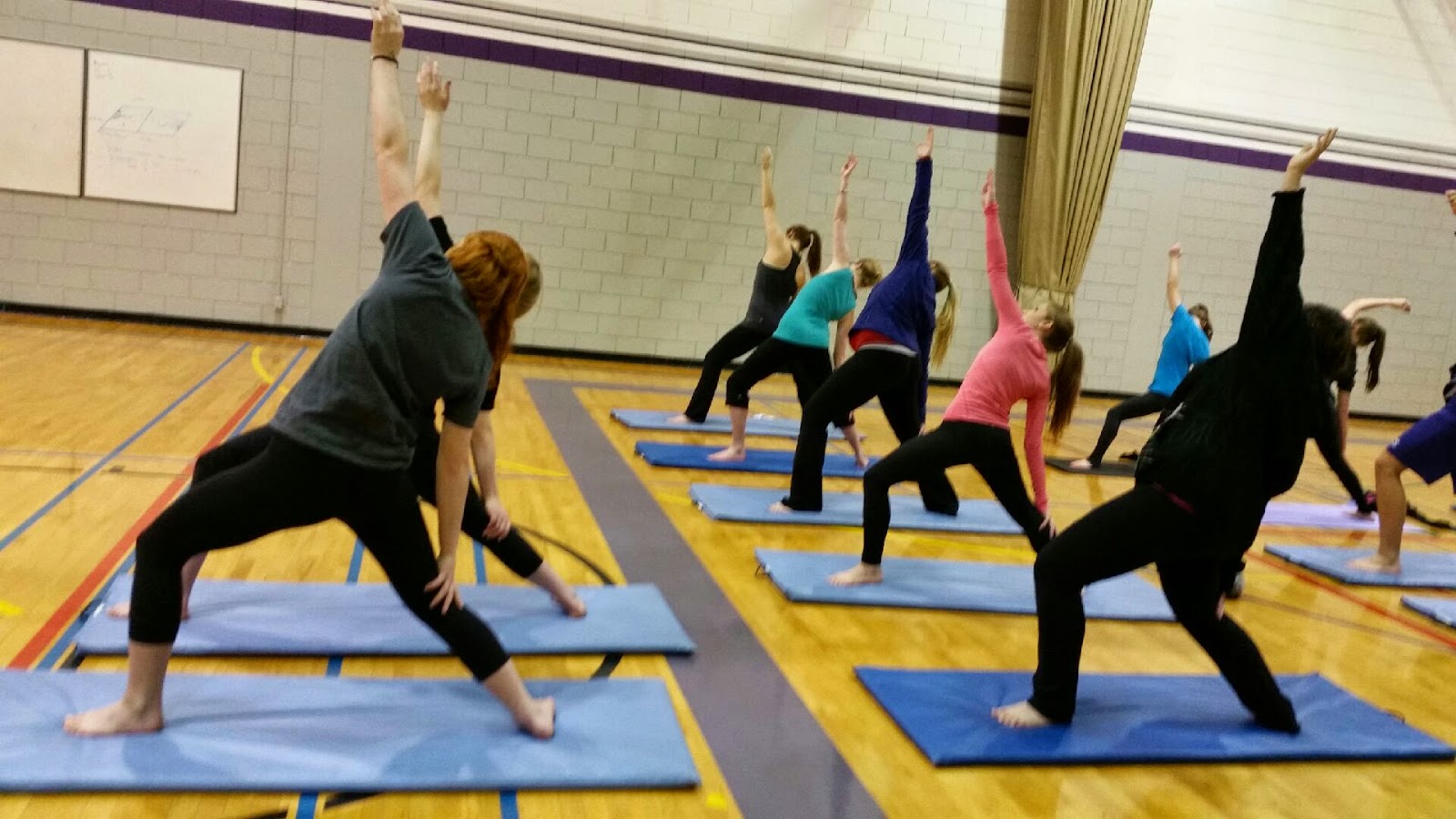
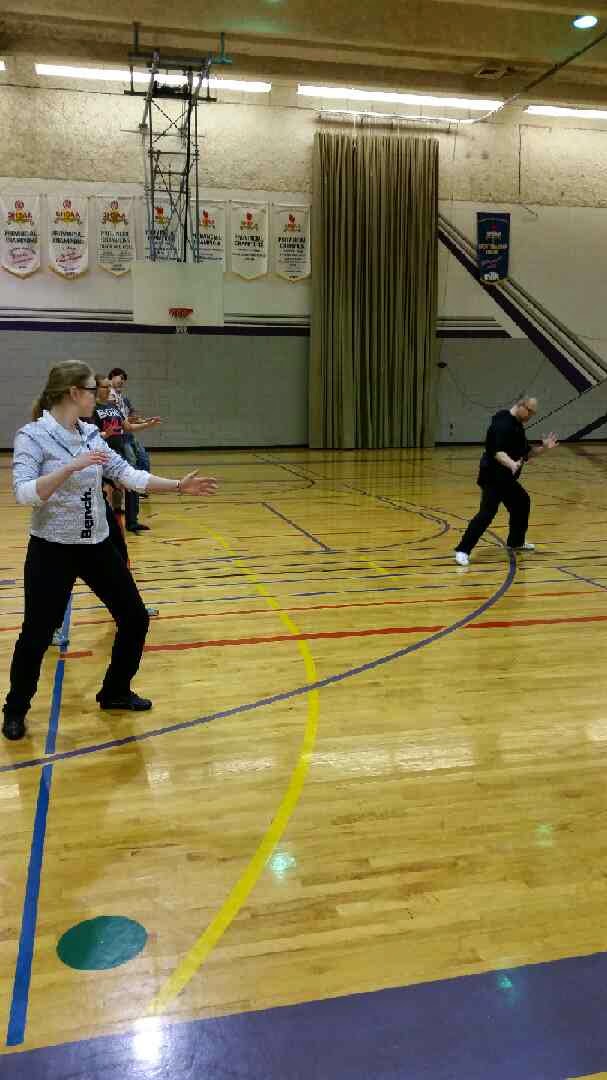
Over the past few days we have been studying different health care philosophies available to Canadians as part of the new Health Science 20 course. Aside from Western Medicine, we have looked at Indigenous, Traditional Chinese, and Complementary and Alternative Medicine. What is more exciting is that we have gotten to practice each of the different health care philosophies. On Wednesday this week we had Amy Lopinski teach Yoga as a form of CAM and today, we had Tim Oehler teach Tai Chi. When we return from the break, medicine man, Hugh Lerat, will be here to share Indigenous Medicine with us. Check out our attempt at these different healh care practices.

Monday, 12 January 2015

Don't Drink the Water! Microscope Activity

Today in Health Science we concluded our diagnostics and treatment unit by simulating how a microscope would be used to diagnose a patient's illness. In the simulation, students pretended to be epidemiologists studying a fictional gastrointestinal epidemic at MCS. After analyzing several patient's case studies, we concluded that the illness originated with the fruits and vegetables they had eaten from the cafeteria. To determine the source of food contamination, we analyzed FAKE stool samples.....yes fake POOP (made from molasses, coffee grounds, gelatin, and water). Yeast, to represent Cholera, was found in the affected stool sample. We could see the pathogen under the light compound microscope after initial examination under the dissecting microscope. Here are some pictures from today's lab.

Wednesday, 7 January 2015

The Motion of Dominoes

Today in Science 10 we began investigating different types of motion. We learned that there are 3 different types: uniform, non-uniform(acceleration and deceleration), and motion with a change of direction. Next we completed a lab to determine the type of motion that falling dominoes have. Here we are setting dominoes and enjoying watching them fall. Can you guess what type of motion falling dominoes have?

Thursday, 4 December 2014

Heart Dissection

In Health Science we have been learning about the cardiovascular system. After studying the third and final component of the cardiovascular system---the heart, we dissected deer, buffalo, and beef hearts. Here are some pictures from our class.

Tuesday, 2 December 2014

Tragedy of the Goldfish...an overfishing simulation

Today in Science 10 we studied the fifth and final threat to biodiversity----Overharvesting! The students completed The Tragedy of the Goldfish activity. This activity had students go fishing using only a straw to catch the fish. Students only needed to catch two fish each round to feed their family, but most students found themselves catching as many as they could each round. It was so extreme that one group caught all of the fish out of their pond. Certainly a good example of what happens in the real world and why overharvesting is a threat to biodiversity. Here are some pictures of students fishing.

Monday, 1 December 2014

Science 10 in the News

Below is a link to the RealAgriculture webpage that has interviews from myself along with two Science 10 students who recently attended the recent Ag Career Expo in Regina. Super Cool!
www.realagriculture.com/2014/11/thinkag-career-education-expo-debuts-canadian-western-agribition

A Threat to Biodiversity!

Today in Science 10 we continued on our journey of looking at the five biggest threats to Biodiversity. Having already studies habitat loss and invasive species, today we looked at the effects of pollution on biodiversity. To study this we played, Deadly Links, a game where grasshoppers ate corn (pipe cleaner pieces), shrews ate grasshoppers, and hawks ate shrews in a given amount of time. What students did not realize was that the white corn pieces were sprayed with a chemical that was then passed along the food chain becoming most concentrated in the higher level consumers. Here are some pictures of us in action.

Wednesday, 26 November 2014

Think AG!

Today the Science 10 class travelled to Regina to attend the first ever Ag Career and Expo at Canadian Western Agribition. Connected to our unit on Career Exploration, student worked through seven different hands on stations to experience what it would be like to work in the agriculture industry. Agriculture areas represented included animal science, agronomy, Ag technology, food science, Ag business, etc. We had a blast and then even had time to tour the CWA before returning to Melville at the end of the day. Here are some pictures from today!

Friday, 21 November 2014

How many animals?

Today in Science 10, we did a mark recapture simulation to estimate the number of animals in a brown plastic bag habitat. The lab was timely after having guest speaker, Allison Henderson, visit our classroom on Wednesday. The students came reasonably close to estimating the actual size of their animal population. Here are some photos from today's class.

Wednesday, 22 October 2014

Would you like some protein with that?

Today in Health Science 20, we were so pleased to have join us, the owners of Pumphouse Athletic Club in Yorkton---Alicia and Carter. They talked at length about the importance of nutrition in their business as body builders. Alicia said that her diet accounts for 90% of her success on stage as a figure builder and only 10% of her success comes from working out. In their presentation, they emphasized the importance of protein in building muscle. In the off season half of their calories come from protein and this number increases to 75% when they are preparing for the stage! Both Carter and Alicia have won titles at the provincial level and it was awesome to hear their stories.

Monday, 20 October 2014

An Experiment on FAT!

Today in Health Science 20, we tested a variety of foods brought from home for the presence of lipids (fat). Some foods contain visible fat while others do not. In order to test for the fat, we performed a rather simple test. We placed the food to be tested on a sheet of brown paper and then placed it in the microwave for no more than 30 seconds before examining the grease spot left by the food. As it turned out, cheese left the biggest mark. The carrot muffin, chips, yogurt dipped granola bar and popcorn also left visible fat stains. Here are some pictures of our lab.

Thursday, 9 October 2014

The Acidity of POP

Which brand of pop do you think is most acidic....Mountain Dew, 7-Up, or Sprite? All three varieties have a lemon-lime flavor. To determine the answer, we carefully performed a titration lab by adding drops of Sodium Hydroxide to the acidic pop and despite numerous trials on each pop the only consistent results we got was that Mountain Dew is the LEAST ACIDIC.